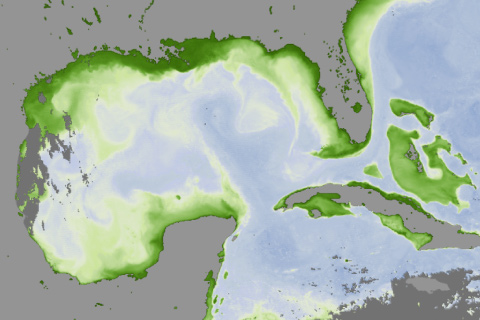
The devastating floods in the Missouri and Mississippi basins aren't the end of the problems caused by the wet spring in 2019. Fertilizer overload from high river runoff is forecast to lead to a very large dead zone in the Gulf of Mexico later this summer.

Antarctica has not responded as quickly to climate change as the Arctic, but Earth’s southernmost continent is still losing ice. Ice shelf disintegration and glacier acceleration in Antarctica could raise global sea level significantly, and the effects would be keenly felt along U.S. coastlines.

Ko Barrett, a Vice Chair of the IPCC, answers questions about the group's recent special report on what 1.5°C of global warming will mean for people, ecosystems, and economies.
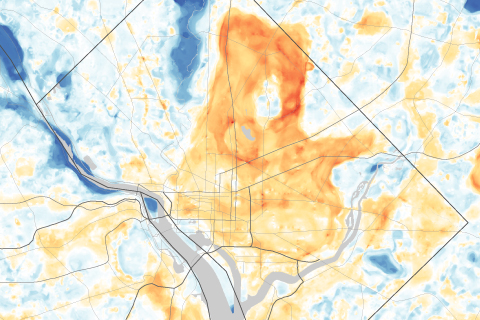
Use a slider to compare satellite images of Washington, DC, and Baltimore, MD, with maps of afternoon temperatures to see the hottest and coolest parts of the city on a late summer day.
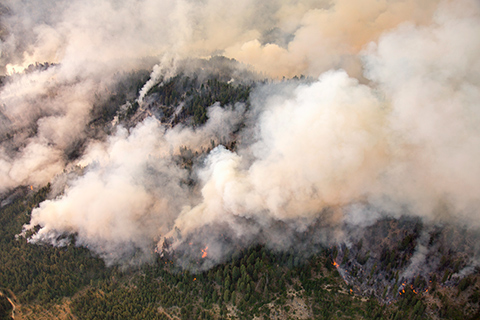
Wildfires are burning larger and more intensely than before, emitting smoke that poses a health risk to people. FIREX will provide information about what chemicals smoke emits in order to keep people healthy.
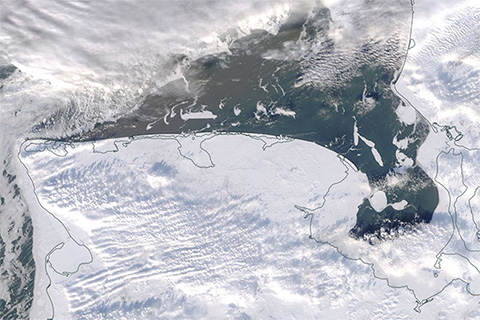
A lack of persistent sea ice in waters around the Bering Strait this winter disrupted travel, damaged roads and other infrastructure, and prevented traditional hunting and fishing in several coastal communities in western Alaska.

Once at odds, a climate expert and botanist who studies ancient plants later teamed up to improve understanding of one of the warmest periods in Earth history.
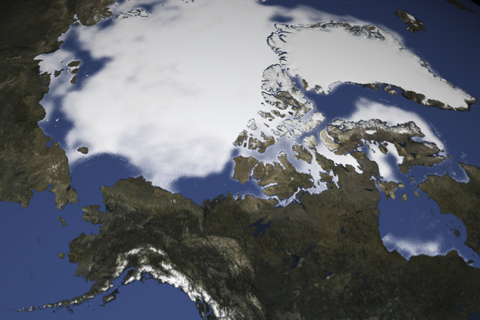
On July 30, a Finnish icebreaker set a new record for the earliest transit through the Northwest Passage.
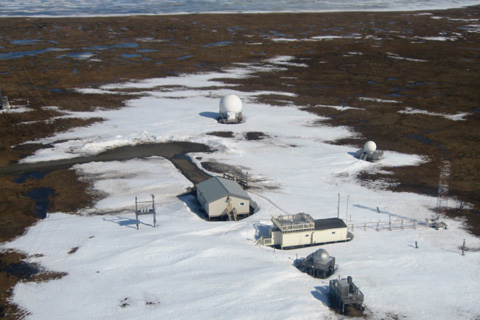
Thanks to warming winters and thawing permafrost, Arctic soil microbes are churning out carbon dioxide well after the end of the growing season ends. This extra source of atmospheric carbon may accelerate a regional warming trend that is already twice as fast as the global average.
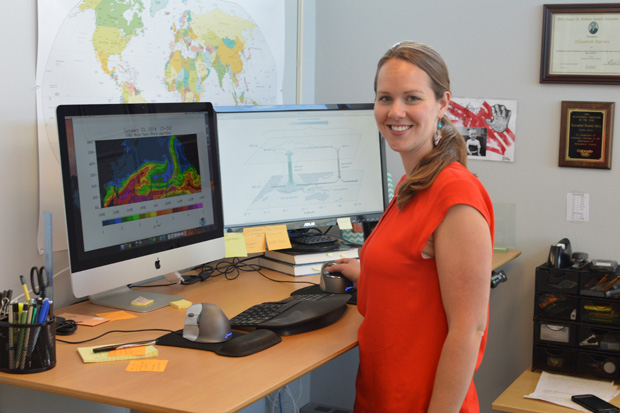
Between the weekly forecast and a seasonal outlook—and often less accurate than both—sit “sub-seasonal” weather predictions. In this profile, atmospheric scientist Libby Barnes talks about her work leading a NOAA task force whose members are trying to overcome the special challenges of forecasting over the 2-week to 2-month horizon.