Browse by Month
Extreme Events
- Department:January 31, 2019
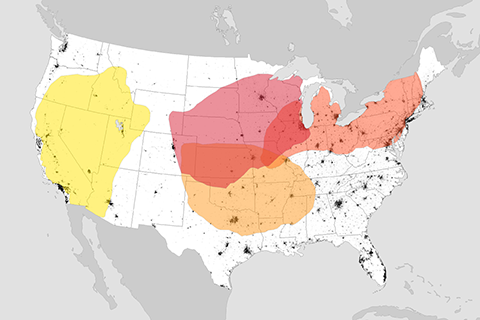
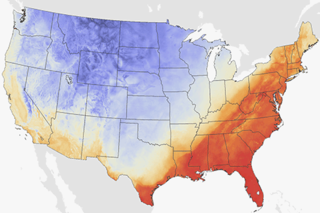
If the recent weather whiplash has left you wondering how U.S. winters are changing over time, NOAA climate maps tell the story.
- Department:November 28, 2018
Members of the Karuk Tribe in northern California maintain that the age-old tradition of prescribed burning holds the answer to climate adaptation planning in the Klamath River range.
- Department:November 16, 2018
Hot, dry and windy weather helped create the conditions needed for wildfires to explode in northern and southern California in November 2018.
- Department:October 15, 2018
Drought, warmth, and a towering ridge of high pressure make an unusual start to fall in Alaska.
- Department:October 9, 2018
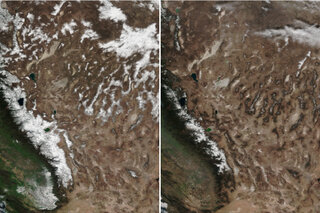
The 2017-2018 water year came to a dry end in California at the end of September, a year after wet conditions alleviated drought.
- Department:October 2, 2018
Costly and inconvenient, high-tide flooding of coastal communities is on the rise. Thanks to higher water levels from El Niño and sea level rise, the number of high-tide flood days in 2018 is projected to be 60% higher this year than would have been common around 2000. Find out what's predicted for your city in this interactive map.
- Department:September 27, 2018
New research suggests the climate change could affect how ENSO impacts temperature and wildfires. Read on to learn what that means.
- Department:September 14, 2018
In the bull's-eye of heaviest rainfall predicted for Hurricane Florence, parts of North and South Carolina may see more than 4 times their average September rainfall in a single week.
- Department:September 6, 2018
Wildfires are burning larger and more intensely than before, emitting smoke that poses a health risk to people. FIREX will provide information about what chemicals smoke emits in order to keep people healthy.
- Department:August 30, 2018
Hot, dry conditions turned northern Europe brown during the summer of 2018.